
1. Why Botanical Precision Matters in High-Traffic Events
When evaluating an Authority Flower Row Manufacturer In the Field, professional buyers should look beyond color and overall appearance.
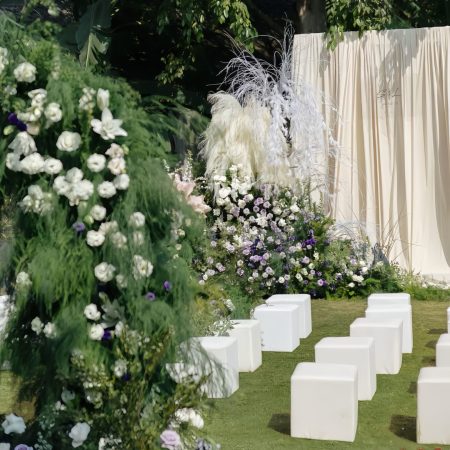
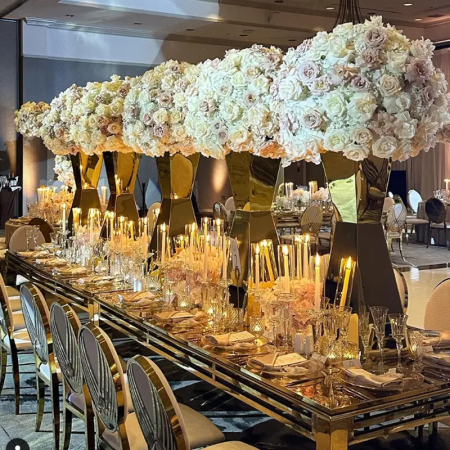
A flower row may be used along a wedding aisle, reception entrance, stage edge, photo backdrop, hotel lobby, banquet corridor, ceremony platform, or commercial event space. These environments share one important characteristic: people are constantly moving around the decoration.
That changes the manufacturing requirements.
In 2026, U.S. wedding décor is increasingly moving toward sculptural, immersive, and highly intentional installations. The Knot highlights architectural shapes, layered tablescapes, warm lighting, and artistic installations among the year’s major décor directions.
The Los Angeles Times similarly describes modern wedding florals as increasingly expressive, tactile, immersive, and integrated into the overall atmosphere of the event.
For this reason, a professional flower row must perform as both a botanical design product and a structural decoration system.
2. What Defines an Authority Flower Row Manufacturer In the Field?

An Authority Flower Row Manufacturer In the Field should be able to control three dimensions simultaneously:
Botanical precision, structural stabilization, and production consistency.
Botanical precision means the flowers should have convincing proportions, petal layering, color transitions, foliage placement, and natural spacing.
Structural stabilization refers to the ability of the finished flower row to maintain its intended form during transportation, installation, movement, and extended event use.
Production consistency means that a buyer ordering 20, 50, or 200 units should receive products that remain visually and dimensionally consistent with the approved sample.
This distinction is particularly important for professional decorators.
A single attractive sample proves that a product can look good.
It does not prove that the manufacturer can reproduce that result at commercial scale.
3. Botanical Precision Starts With Flower Selection
For an Authority Flower Row Manufacturer In the Field, botanical precision begins long before the final assembly.
Manufacturers should first determine which flower varieties are appropriate for the intended visual concept.
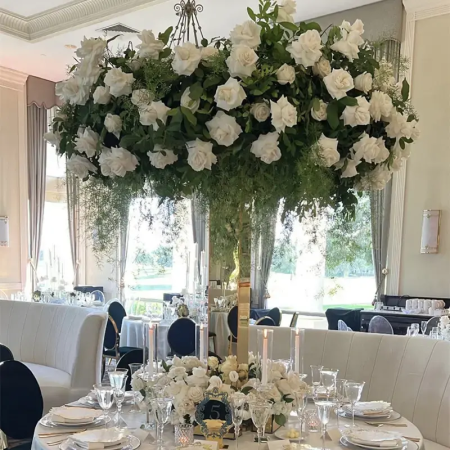
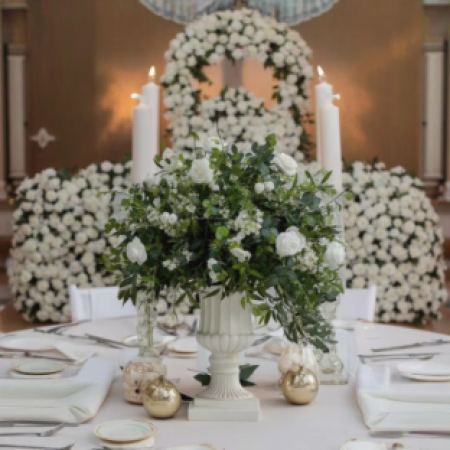
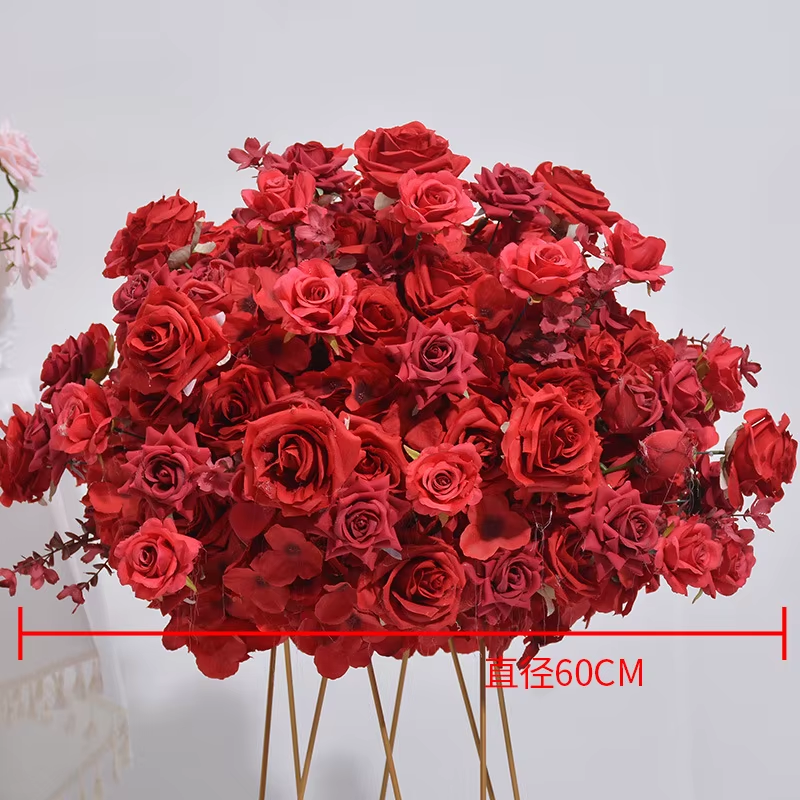
A dense romantic flower row may require roses, peonies, hydrangeas, or garden-style blooms. A contemporary installation may use orchids, anthuriums, calla lilies, foliage, branches, or other architectural botanical forms.
The manufacturer must then consider:
- flower-head proportions
- petal layering
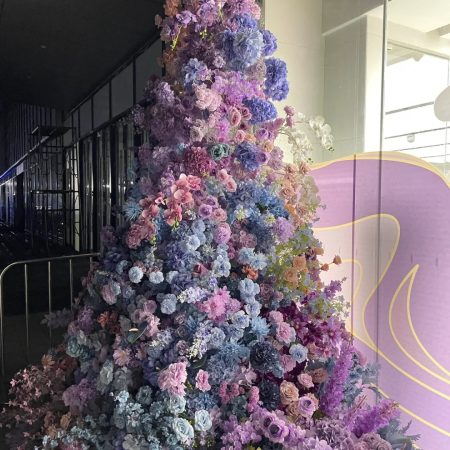
- color gradients
- leaf dimensions
- stem direction
- flower density
- spacing between blooms
- visual balance
- overall row height and depth
The objective is not to make every flower perfectly identical.
Natural-looking artificial floral design often depends on controlled variation.
Different flower angles, slightly different heights, layered foliage, and uneven botanical rhythms can make a large installation appear more organic.
4. The Yongnuo Manufacturing Approach
Yongnuo Flower approaches custom artificial floral production with an emphasis on commercial application, customization, and repeatable manufacturing.
For professional buyers, this matters because a flower row is rarely an isolated product.
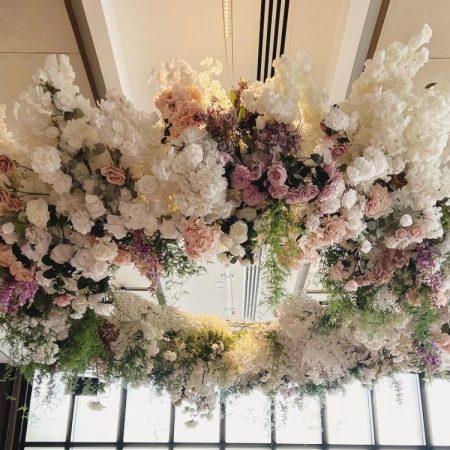
It usually needs to fit a broader design system involving arches, centerpieces, floral walls, hanging installations, aisle decorations, stage décor, or reception styling.
A manufacturer therefore needs to understand the relationship between the individual flower row and the complete event environment.
Key production specifications may include:
- finished length
- finished height
- finished depth
- flower varieties
- color palette
- foliage ratio
- flower density
- frame or support structure
- attachment method
- finished weight
- packaging dimensions
- installation method
This specification-driven approach helps transform a decorative concept into a repeatable commercial product.
5. Stabilization Is Critical in High-Traffic Areas
The defining characteristic of an Authority Flower Row Manufacturer In the Field is not simply botanical realism.
It is the ability to maintain that realism when the product is actually being used.
High-traffic event environments create constant mechanical challenges.
Guests may walk close to the installation. Wedding dresses may brush against the flowers. Event staff may move tables, chairs, lighting equipment, and other decorations nearby. Installation teams may need to reposition or reshape sections before the event begins.
A poorly constructed flower row can gradually lose its shape.
Professional stabilization can involve:
- reinforced internal frames
- secure stem attachment
- properly distributed weight
- strong connection points
- flexible but controlled wiring
- reinforced base structures
- appropriate mounting hardware
- protective packaging
The exact construction should depend on the final application.
A lightweight aisle arrangement does not require the same structure as a large commercial floral installation.
6. Why Weight Distribution Matters
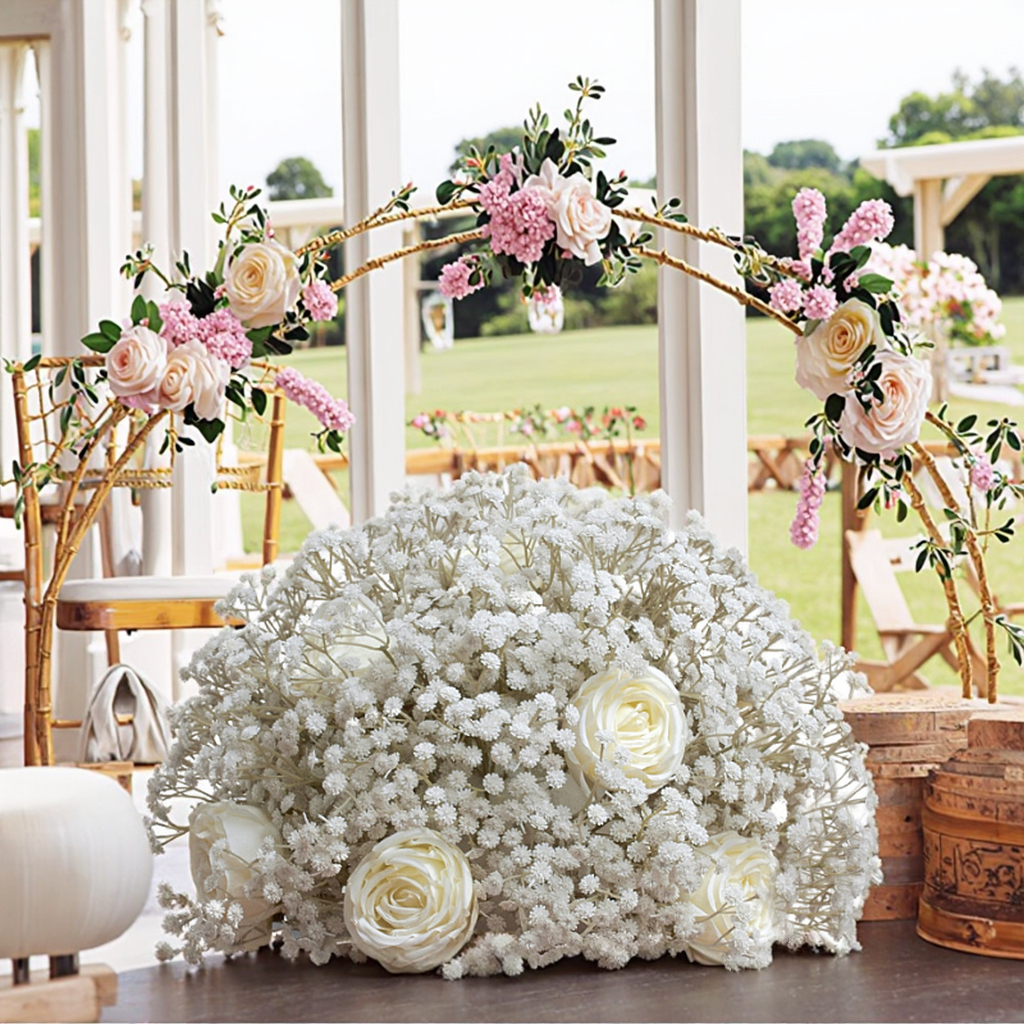
For an Authority Flower Row Manufacturer In the Field, weight distribution is an important engineering consideration.
A flower row that is visually attractive but excessively top-heavy can become difficult to install and transport.
Uneven weight can also create pressure on connection points.
For large installations, the manufacturer should therefore consider where the weight is concentrated and how the finished product will be supported.
A professional specification should ideally identify:
- Total finished weight
- Approximate weight distribution
- Support points
- Installation orientation
- Connection method
- Recommended handling procedure
This is especially relevant for hotel ballrooms, convention centers, wedding venues, and event halls where installation teams may need to move multiple units quickly.
The goal is not to make every flower row unnecessarily heavy.
The goal is to achieve the required stability with an efficient structure.
7. High-Traffic Events Require Better Surface and Shape Recovery
An Authority Flower Row Manufacturer In the Field should also understand what happens after the product leaves the factory.
Artificial flowers are often compressed during international shipping.
They may arrive with petals, foliage, or branches temporarily displaced.
A professional product should be designed so that installers can restore its intended appearance without excessive labor.
Shape recovery is therefore an important commercial consideration.
Buyers should test whether:
- petals return to their intended form
- stems can be repositioned
- foliage can be reshaped
- connection points remain secure
- the structure survives repeated handling
- packaging minimizes permanent deformation
For rental companies, this becomes even more important because the same product may be installed, removed, transported, stored, and installed again.
8. Quality Control Should Compare the Finished Product With the Approved Sample
For an Authority Flower Row Manufacturer In the Field, quality control should not stop with checking whether flowers are present.
The finished product should be compared against the approved specification.
A useful inspection checklist includes:
| Inspection Area | What Buyers Should Check |
|---|---|
| Flower type | Correct varieties and proportions |
| Color | Consistent with approved sample |
| Density | No unexpected gaps or excessive crowding |
| Dimensions | Length, height, and depth within tolerance |
| Structure | Secure internal support |
| Attachment | Flowers and foliage firmly connected |
| Shape | Overall form matches approved design |
| Weight | Suitable for intended installation |
| Packaging | Protection against crushing and deformation |
This approach reduces the risk of receiving a product that technically matches the purchase order but visually differs from the approved sample.
9. Flower Rows for Different Commercial Applications
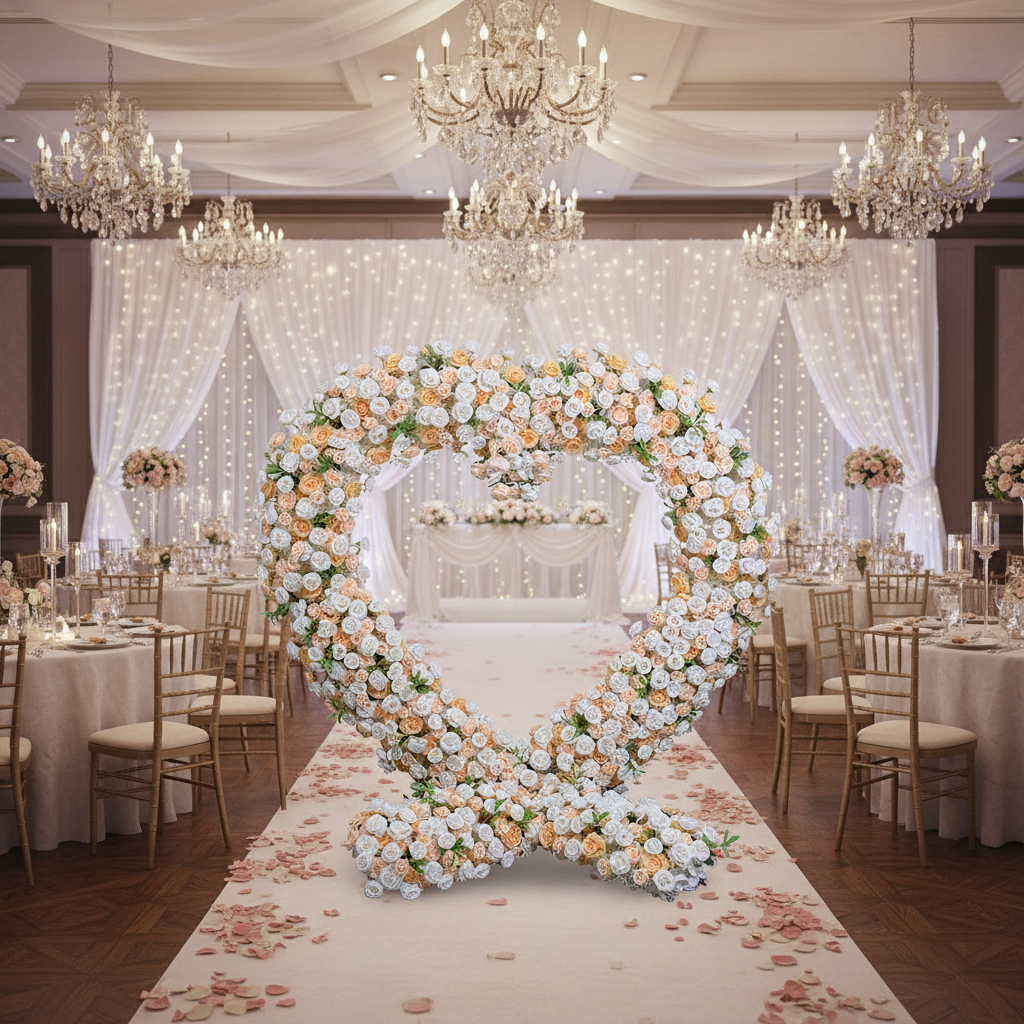
Not every flower row needs the same manufacturing specification.
An aisle flower row may prioritize low weight and easy repositioning.
A hotel entrance may prioritize long-term visual stability.
A wedding stage installation may require higher flower density and stronger structural support.
A rental company may prioritize durability and shape recovery.
A wholesale distributor may prioritize packaging efficiency, SKU consistency, and repeat-order reliability.
This is why Authority Flower Row Manufacturer In the Field should be understood as a manufacturing capability rather than a simple product label.
The right supplier should be able to adapt construction to the customer’s actual application.
Typical Applications
- Wedding aisle decoration
- Ceremony backdrops
- Banquet table borders
- Hotel entrance decoration
- Stage and platform decoration
- Photo booth installations
- Floral walls
- Corporate event decoration
- Retail display installations
- Wedding rental inventory
10. How U.S. Buyers Should Evaluate a Flower Row Supplier
Before choosing a supplier, American buyers should request more than a catalog photograph.
Ask for:
- close-up product photographs
- production videos
- finished dimensions
- finished weight
- material information
- sample availability
- packaging details
- customization options
- quality inspection procedures
- production lead time
- bulk-order photographs
- replacement and after-sales procedures
For an Authority Flower Row Manufacturer In the Field, the supplier’s answers should be specific rather than generic.
A manufacturer that can explain exactly how it controls flower density, dimensions, structure, packaging, and batch consistency demonstrates a stronger understanding of commercial production.
Buyers should also distinguish between marketing claims and measurable specifications.
“High quality” is a marketing phrase.
A defined finished size, approved sample, inspection checklist, and packaging specification are measurable purchasing standards.
11. Why Stabilization Standards Protect the Event Experience
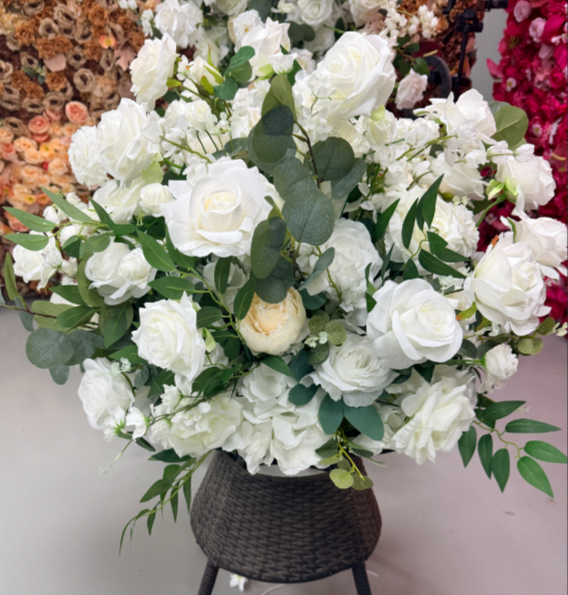
The value of an Authority Flower Row Manufacturer In the Field becomes most obvious when the product is installed in front of hundreds of guests.
Event decoration is not static inventory.
It exists inside an active environment.
People walk around it. Photographers work around it. Staff move equipment around it. Lighting changes throughout the event. The installation may remain in place for many hours.
A stable flower row helps preserve the visual concept from the beginning of the event to the final photograph.
That consistency contributes to the perceived quality of the entire venue.
In premium weddings, this is particularly important because floral installations are increasingly treated as major visual elements rather than simple finishing details. Contemporary wedding design is moving toward larger, more sculptural and immersive floral experiences.
FAQ
What should buyers look for in an Authority Flower Row Manufacturer In the Field?
Look for botanical realism, repeatable dimensions, secure construction, appropriate stabilization, reliable packaging, customization capability, and consistent quality between samples and bulk production.
How do I test a flower row before ordering in bulk?
Request a physical sample and evaluate its dimensions, weight, flower density, attachment points, shape recovery, packaging, and appearance under the lighting conditions expected at the event.
Are heavier flower rows always more stable?
No. Excessive weight can create additional transportation and installation challenges. The objective is a balanced structure that provides appropriate stability without unnecessary weight.
Can artificial flower rows be used in high-traffic wedding venues?
Yes, provided the product is designed and stabilized for the intended environment. Buyers should confirm the structure, attachment method, installation requirements, and handling procedures before purchasing.
What information should a U.S. buyer give the manufacturer?
Provide the desired dimensions, flower varieties, color palette, quantity, installation location, expected viewing distance, event type, packaging requirements, and installation method.
Conclusion
An Authority Flower Row Manufacturer In the Field should deliver more than attractive artificial flowers.
The real standard is the combination of botanical precision, structural stability, dimensional consistency, packaging protection, and repeatable production.
For U.S. wedding planners, event decorators, hotel purchasing teams, rental companies, wholesalers, and commercial buyers, this distinction can significantly reduce sourcing risk.
The best flower row is not necessarily the one with the most flowers or the lowest quotation.
It is the one that maintains its intended appearance, structure, and performance throughout transportation, installation, high-traffic event use, photography, removal, and—when required—future reuse.
That is the difference between a decorative product and a professional event-grade floral solution.