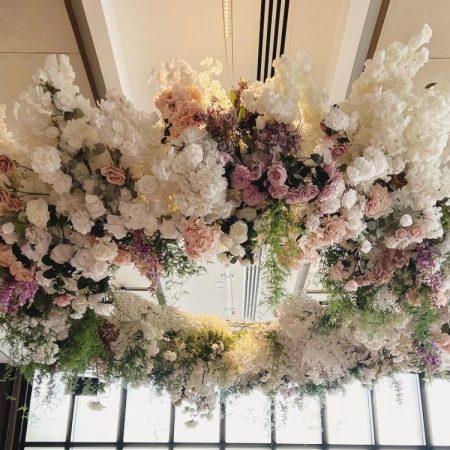

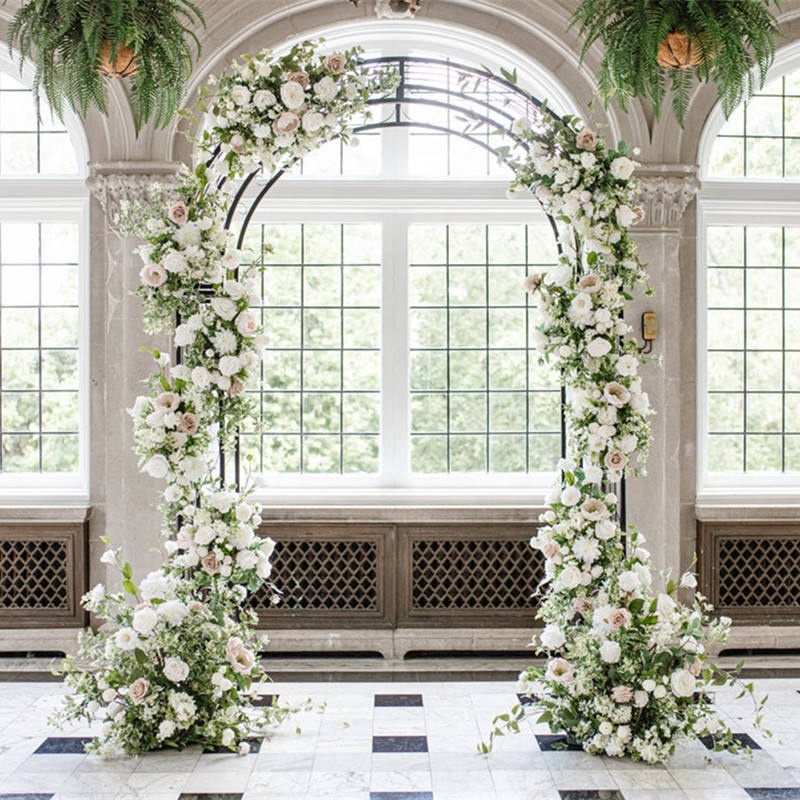
For U.S. wedding planners, event decorators, floral rental companies, wholesalers, retailers, and commercial buyers, choosing an artificial rose bouquet supplier is not simply about finding an attractive product at a competitive price.
The real challenge is finding a manufacturer that can deliver consistent quality, customization, production capacity, reliable packaging, and predictable lead times.
That is why Professional Artificial Rose Bouquet Manufacturer Excellence should be evaluated through the entire manufacturing and fulfillment process.
Yongnuo reports that its manufacturing operation includes a 30,000-square-meter production base and 20 production lines. For international buyers, the significance of this infrastructure is not simply its physical size. The real value lies in how manufacturing space, production capacity, material planning, quality inspection, and packaging can work together to support larger and more time-sensitive orders.
1. Why Factory Scale Matters for Artificial Rose Bouquet Buyers
Artificial rose bouquets may appear simple from the outside, but commercial production involves many individual components.
Petals, leaves, stems, wrapping materials, greenery, decorative accessories, and packaging all need to move through the production process in the correct sequence.
When a buyer places a large wholesale order, even a small bottleneck can affect the final production schedule.
A larger manufacturing facility can provide more space for:
- Raw material storage
- Component production
- Assembly
- Quality inspection
- Finished-product handling
- Packaging
- Order staging
For this reason, Professional Artificial Rose Bouquet Manufacturer Excellence is closely connected to manufacturing infrastructure.
However, factory size alone does not automatically make delivery fast. The real advantage comes from combining physical capacity with organized production planning and material management.
2. How a 30,000sqm Factory Supports Faster Production
Yongnuo’s published information describes a 30,000-square-meter manufacturing facility equipped with 20 production lines.
A facility of this scale allows production activities to be organized into clearer operational areas.
A typical workflow can include:
Material Preparation → Component Production → Flower Assembly → Bouquet Arrangement → Inspection → Packaging → Shipment
When these processes are properly coordinated, fewer unnecessary transfers and production interruptions can occur.
This is particularly valuable for American buyers working with fixed wedding dates, seasonal campaigns, retail launches, or event installation deadlines.
Therefore, Professional Artificial Rose Bouquet Manufacturer Excellence is not simply about owning a large factory. It is about converting factory capacity into a more efficient production workflow.
3. Twenty Production Lines Create Greater Scheduling Flexibility
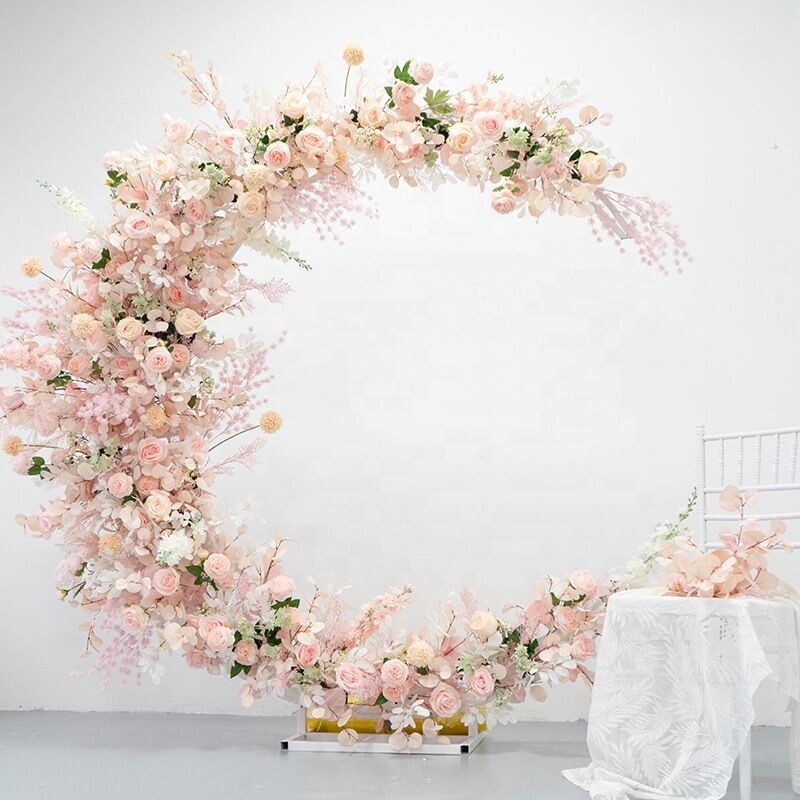
Yongnuo’s reported 20-production-line configuration is particularly relevant for wholesale buyers because international orders rarely remain completely standardized.
One customer may need classic white roses.
Another may require champagne or blush tones.
A wedding decorator may request a completely customized palette with matching greenery.
A retailer may require hundreds of identical bouquets for a seasonal campaign.
With multiple production lines, different product families and production programs can potentially be managed simultaneously.
This type of flexibility becomes increasingly important as buyers move from small trial orders toward larger commercial programs.
For buyers, Professional Artificial Rose Bouquet Manufacturer Excellence should therefore include the manufacturer’s ability to manage different order requirements while maintaining production consistency.
4. Yongnuo Flower: Connecting Manufacturing Capacity With Customer Requirements
Yongnuo Flower provides a connection between artificial flower manufacturing and customized wedding decoration requirements.
For professional buyers, this integrated approach can be particularly useful when a project requires more than one standard SKU.
Artificial rose bouquet customization may involve:
- Rose style
- Flower color
- Bouquet size
- Stem length
- Greenery combination
- Arrangement density
- Wrapping style
- Packaging configuration
Instead of treating every bouquet as an isolated product, a manufacturer can develop coordinated solutions around the buyer’s project requirements.
That makes Professional Artificial Rose Bouquet Manufacturer Excellence about more than production volume. It becomes the ability to translate a customer’s visual concept into repeatable manufacturing specifications.
5. Fast Delivery Starts Before Production
Many international buyers focus on shipping speed when evaluating suppliers.
But international delivery begins much earlier than the moment a carton leaves the factory.
A reliable fulfillment process starts with:
- Clear product specifications
- Confirmed quantities
- Sample approval
- Material preparation
- Production scheduling
- Quality inspection
- Packaging
- Export preparation
If the production stage is delayed by several days, using a faster shipping method cannot necessarily recover the lost time.
This is why Professional Artificial Rose Bouquet Manufacturer Excellence depends heavily on upstream planning.
For a U.S. buyer, a more useful question is not simply:
“How fast can you ship?”
A better question is:
“What is your realistic production lead time after sample approval and order confirmation?”
That distinction helps buyers evaluate actual manufacturing capability rather than marketing promises.
6. Material Availability Can Protect Production Schedules
Artificial rose bouquets depend on multiple materials.
If one critical component is unavailable, the entire production order may have to wait.
Material planning therefore becomes an important part of commercial manufacturing.
When frequently used fabrics, polymers, stems, greenery components, pigments, packaging materials, and other inputs are properly planned, manufacturers can reduce the risk of production interruptions.
This is especially important during seasonal demand.
For example, U.S. buyers may experience increased demand around:
- Valentine’s Day
- Mother’s Day
- Spring wedding season
- Summer weddings
- Holiday events
- Christmas retail campaigns
A factory with organized production and material planning can be better positioned to respond to concentrated demand.
For this reason, Professional Artificial Rose Bouquet Manufacturer Excellence includes the ability to manage materials before they become production bottlenecks.
7. Quality Control Must Move at the Same Speed as Production
Fast production is meaningless if the finished bouquets are inconsistent.
Artificial roses can vary in:
- Color
- Petal shape
- Flower fullness
- Stem positioning
- Assembly quality
- Overall bouquet appearance
For large commercial orders, these differences become much more noticeable.
A professional quality-control system should therefore operate throughout the production process.
Important checkpoints can include:
Incoming Materials → Components → Assembly → Finished Products → Packaging
Yongnuo’s published manufacturing information describes a multi-stage quality-control approach extending from material selection through final packaging.
For American buyers, Professional Artificial Rose Bouquet Manufacturer Excellence means balancing production speed with product consistency.
The goal should not be simply to manufacture faster.
The goal should be to manufacture correctly and consistently.
8. Sample Approval Creates a Faster Production Language
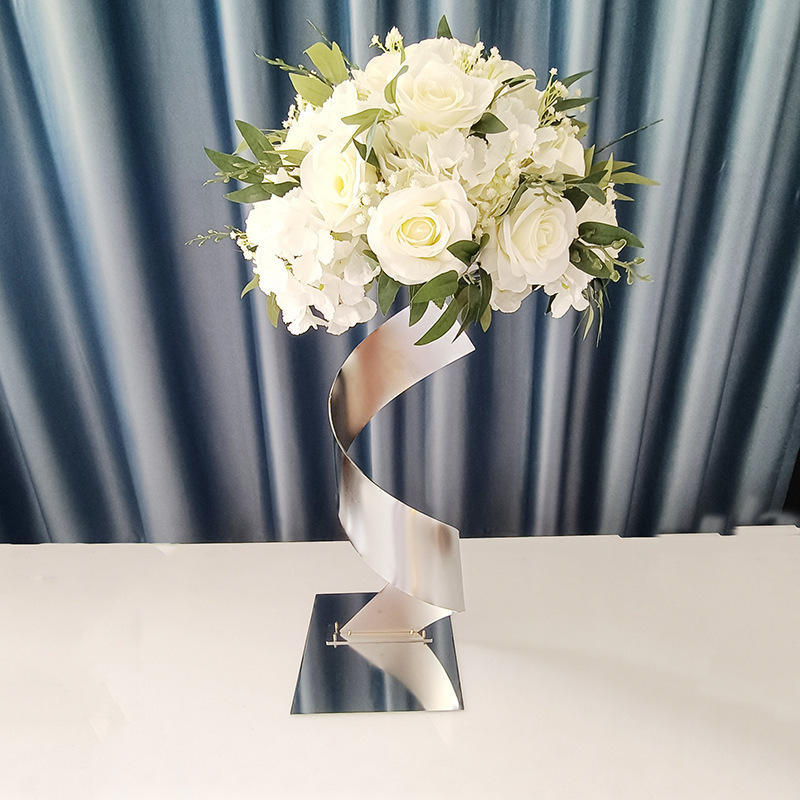
A professionally approved sample can dramatically reduce communication problems between international buyers and manufacturers.
Written descriptions such as “light pink,” “large rose,” or “full bouquet” can be interpreted differently by different people.
A physical sample provides a common reference for:
- Color
- Flower size
- Petal structure
- Bouquet density
- Stem length
- Greenery
- Wrapping
- Packaging
Once the buyer approves the sample, the manufacturer has a clearer production target.
This can reduce repeated clarification and help production move forward more efficiently.
For this reason, Professional Artificial Rose Bouquet Manufacturer Excellence also depends on the ability to transform creative requirements into measurable production references.
9. Packaging Is Part of Fast Delivery
Manufacturing is not complete simply because the flowers have been assembled.
International transportation creates another challenge.
Artificial rose bouquets can be affected by:
- Compression
- Bent stems
- Crushed petals
- Improper carton loading
- Excessive packaging volume
- Poor internal protection
Effective packaging should balance:
Protection + Space Efficiency + Handling Convenience
For large wholesale orders, carton dimensions and packing quantities can also influence freight planning.
A supplier that considers packaging during production can reduce last-minute repacking and shipment preparation.
Therefore, Professional Artificial Rose Bouquet Manufacturer Excellence extends beyond the production floor into the export process.
10. Why This Matters to U.S. Wedding and Retail Buyers
American buyers often operate according to strict commercial schedules.
A wedding rental company may already have a venue booked.
An event decorator may have an installation date that cannot move.
A retailer may have a seasonal launch date.
A distributor may need inventory before a major sales period.
In these situations, supplier reliability has direct commercial value.
Buyers should evaluate manufacturers using a broader scorecard:
| Evaluation Area | What Buyers Should Ask |
|---|---|
| Factory capacity | Can the supplier handle my required volume? |
| Production lead time | What is the realistic manufacturing schedule? |
| Customization | Can colors, sizes and arrangements be modified? |
| Quality control | How is sample-to-bulk consistency maintained? |
| Packaging | How are bouquets protected during export? |
| Communication | Who manages the order after confirmation? |
| Repeat orders | Can the same design be reproduced later? |
| Logistics | How is international shipment coordinated? |
Professional Artificial Rose Bouquet Manufacturer Excellence is ultimately demonstrated through the supplier’s complete ability to answer these questions.
11. Fast Delivery Should Mean Predictable Delivery
There is an important difference between fast delivery and predictable delivery.
A manufacturer may occasionally complete an order quickly.
That does not necessarily mean the same performance can be repeated during peak seasons or larger production programs.
Professional B2B buyers need predictability.
A realistic production timeline should clearly identify:
- Sample development
- Sample approval
- Material preparation
- Bulk production
- Quality inspection
- Packaging
- Shipment preparation
Yongnuo’s reported 30,000-square-meter facility and 20 production lines are presented as infrastructure supporting stable and scalable manufacturing capacity.
For buyers, the key question is therefore not whether a factory can promise an extremely short lead time.
The better question is whether the supplier has enough infrastructure and process discipline to make its delivery schedule more predictable.
12. The Business Value of Manufacturing Scale
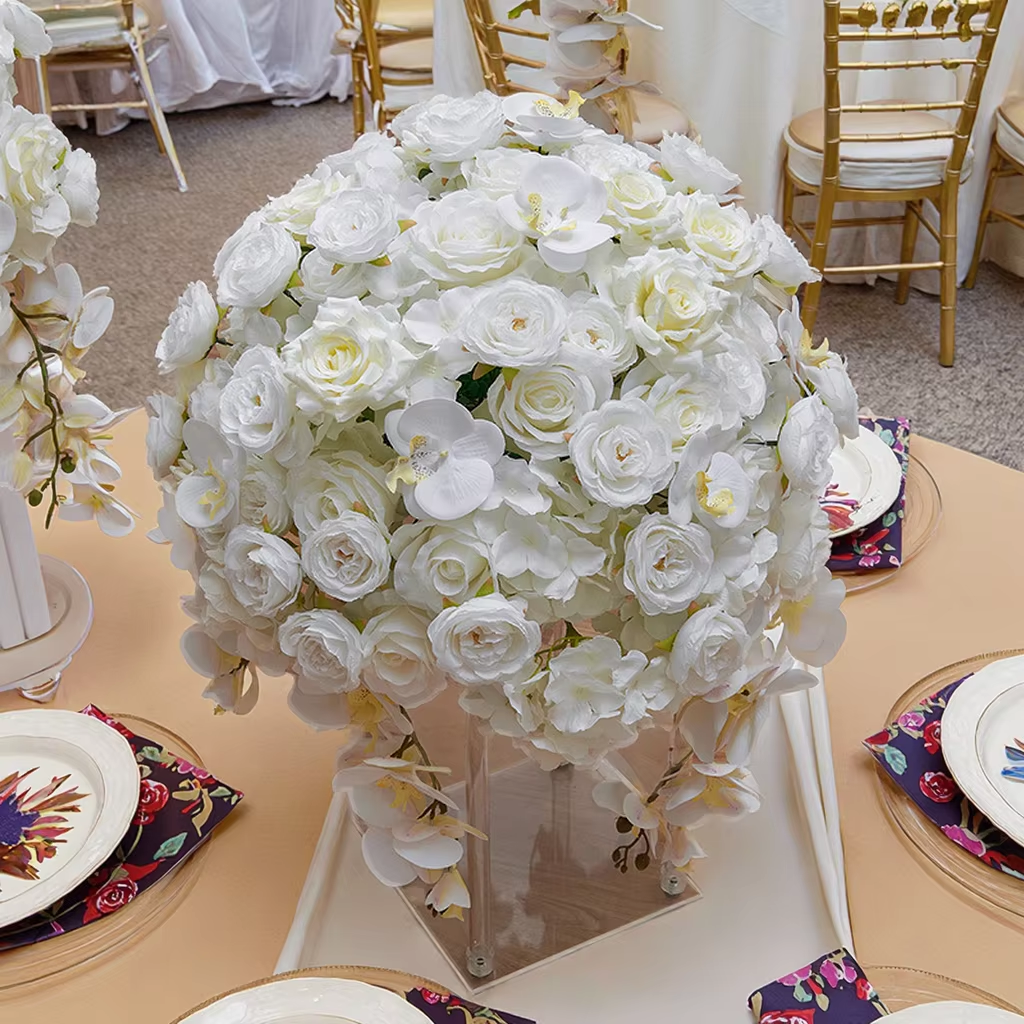
A 30,000-square-meter manufacturing facility is valuable because of what the infrastructure enables.
For international buyers, greater manufacturing scale can support:
- Larger order volumes
- Multiple production programs
- Better material organization
- Customized product development
- Structured quality inspection
- Large-scale packaging
- Seasonal demand management
This can reduce some of the risks associated with fragmented sourcing.
For wedding decorators and event companies, working with an integrated manufacturer may also simplify communication because fewer suppliers are involved in producing complementary products.
13. What U.S. Buyers Should Ask Before a Large Rose Bouquet Order
Before approving a major order, buyers should request specific information instead of relying on general claims about speed.
Ask the manufacturer for:
- Production lead time after sample approval
- Minimum order quantity
- Customization options
- Material specifications
- Quality inspection procedures
- Packaging dimensions
- Carton quantity
- Shipping terms
- Production updates
- Repeat-order procedures
A professional supplier should be able to explain these steps clearly.
The best supplier is not necessarily the manufacturer promising the shortest delivery time.
It is the manufacturer that can provide a realistic timeline and consistently execute against it.
FAQ: Professional Artificial Rose Bouquet Manufacturer Excellence
What makes a reliable artificial rose bouquet manufacturer?
A reliable manufacturer combines product quality, manufacturing capacity, customization, quality control, packaging, communication, and predictable production lead times.
Does a 30,000sqm factory guarantee fast delivery?
Factory scale can support faster and more predictable production, but international delivery also depends on freight schedules, customs clearance, destination conditions, and other external factors.
Therefore, factory size should be viewed as an important foundation for delivery performance rather than an absolute guarantee of transit time.
How many production lines does Yongnuo operate?
Yongnuo states that its manufacturing facility operates 20 specialized production lines.
Can artificial rose bouquets be customized?
Yes. Depending on the product and order requirements, customization can include colors, sizes, greenery combinations, bouquet configurations, wrapping, and packaging.
Why is production speed important for U.S. wedding buyers?
Wedding projects frequently operate around fixed event and installation dates. Efficient manufacturing can therefore help buyers plan inventory and project schedules with greater confidence.
Conclusion
For international buyers, the true value of a large artificial flower factory is not simply its production volume.
It is the ability to coordinate materials, production lines, quality inspection, assembly, packaging, and export preparation within a connected manufacturing system.
Yongnuo’s reported 30,000-square-meter manufacturing facility and 20 production lines provide the physical foundation for this type of large-scale production model.
For U.S. wedding planners, decorators, wholesalers, retailers, and event companies, the practical lesson is straightforward:
Evaluate the entire fulfillment system—not just the product price.
A strong artificial rose bouquet supplier should combine manufacturing capacity with disciplined planning, quality consistency, customization capability, packaging expertise, and transparent communication.
When these elements work together, factory scale can help shorten production cycles and create a more predictable path from approved sample to finished shipment.
That is the real business value behind Yongnuo’s manufacturing infrastructure.