

The US artificial flower market is entering a more sophisticated stage in 2026.
For wholesalers, wedding professionals, retailers, event companies, interior decorators, and sourcing managers, understanding the Artificial Flower Industry Trends 2026 is becoming increasingly important.
The market is no longer driven simply by low prices and large product catalogs.
US buyers are paying more attention to:
- realistic appearance
- premium materials
- tactile texture
- sophisticated color palettes
- customized designs
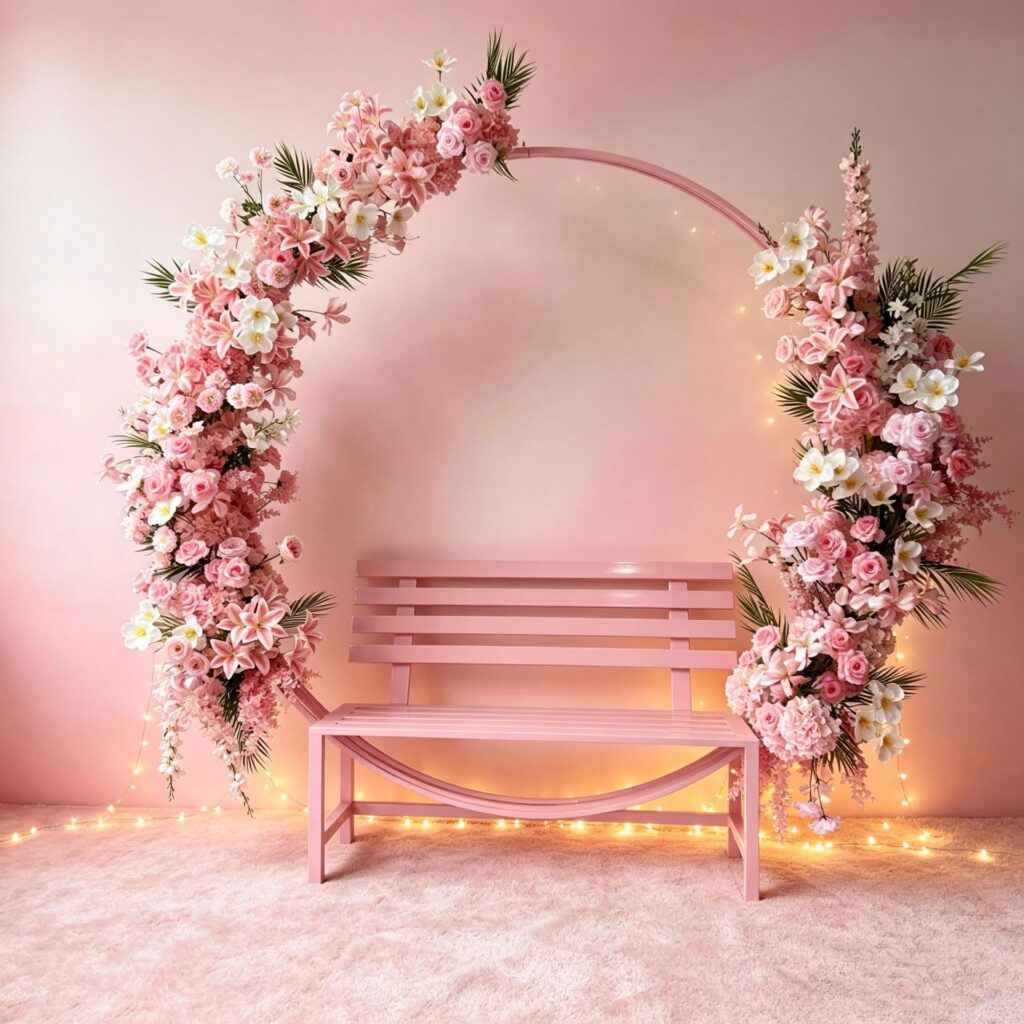
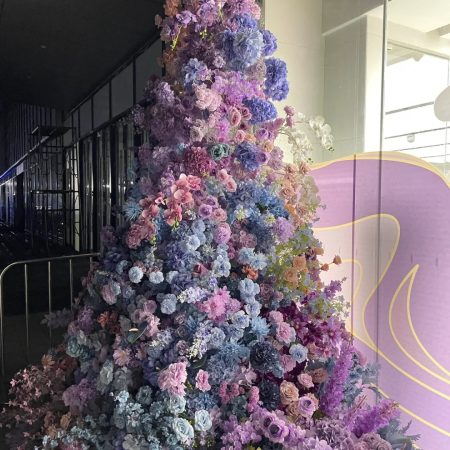
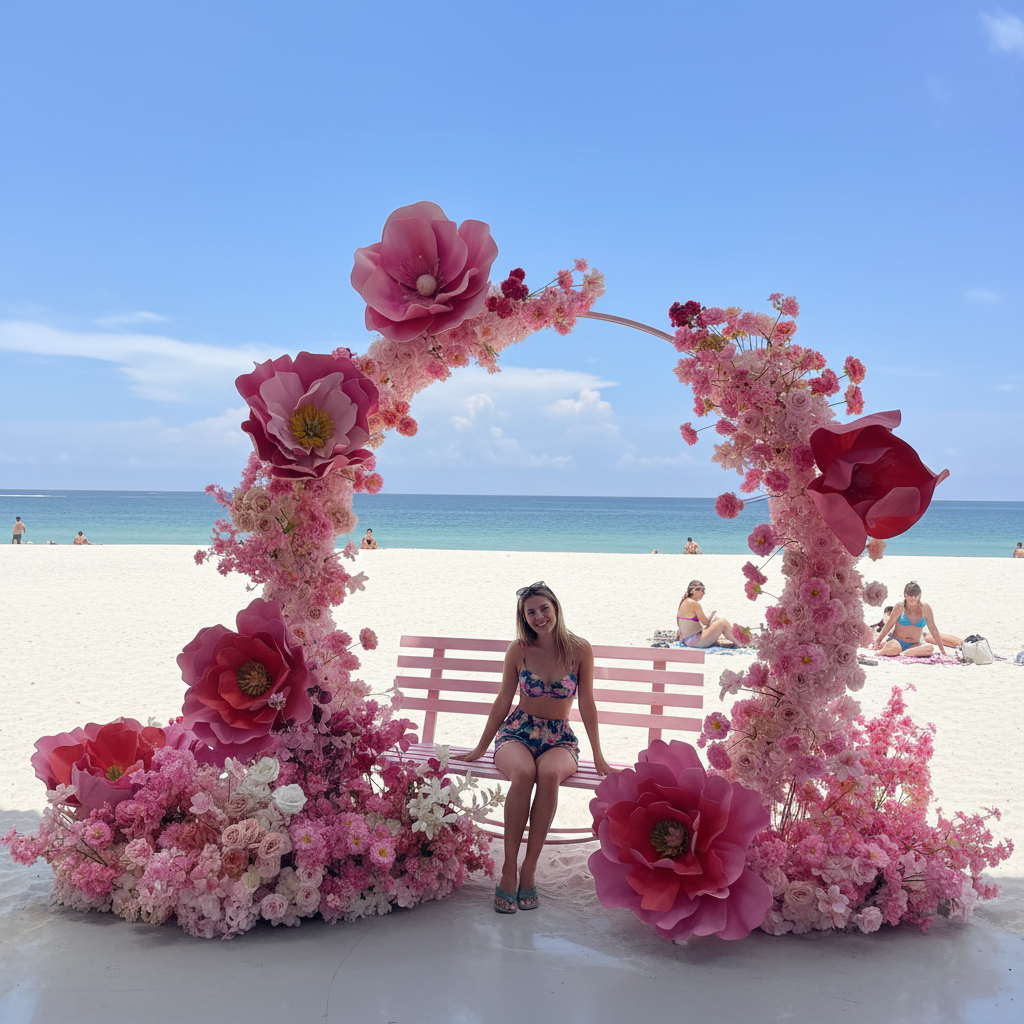
- oversized floral installations
- wedding applications
- commercial decoration
- reusable products
- reliable wholesale supply
Recent industry and design coverage also shows a stronger preference for personalized wedding aesthetics, sculptural arrangements, natural-looking greenery, richer textures, and statement floral designs.
For artificial flower suppliers and manufacturers, these changes create both challenges and significant opportunities.
Here are the most important developments US buyers should watch.
1. The US Market Is Moving Toward Premium-Looking Artificial Flowers
One of the most important Artificial Flower Industry Trends 2026 is the continued shift away from visibly synthetic-looking products.
For years, low-cost artificial flowers were often associated with shiny plastic petals, unrealistic colors, stiff stems, and repetitive designs.
That perception is changing.
Modern buyers increasingly expect artificial flowers to look convincing from both a distance and close up.
Important quality factors now include:
- realistic petal texture
- natural color gradients
- flexible stems
- detailed leaves
- realistic flower proportions
- subtle variations between individual flowers
- soft-touch or real-touch materials
This creates an important opportunity for US wholesalers.
Instead of competing only on price, businesses can build higher-value product collections around realistic artificial flowers.
For wedding companies, retailers, and interior designers, premium-looking products can also support higher retail prices and stronger customer perception.
2. Oversized Floral Designs Are Becoming Stronger Statement Pieces
Another important Artificial Flower Industry Trends 2026 signal is the growing popularity of oversized floral arrangements.
Large-scale floral designs are particularly effective in spaces where the decoration needs to create an immediate visual impact.
Examples include:
- wedding ceremony backdrops
- hotel entrances
- reception areas
- restaurant interiors
- retail displays
- photo walls
- event stages
- luxury residential interiors
Instead of using dozens of small arrangements, designers can use one large statement installation as the main focal point.
This trend is especially attractive for artificial flowers because large arrangements can be prepared in advance, transported, installed, removed, and reused.
For B2B buyers, this also creates opportunities to sell complete solutions instead of individual stems.
A supplier may provide:
- flower panels
- floral arches
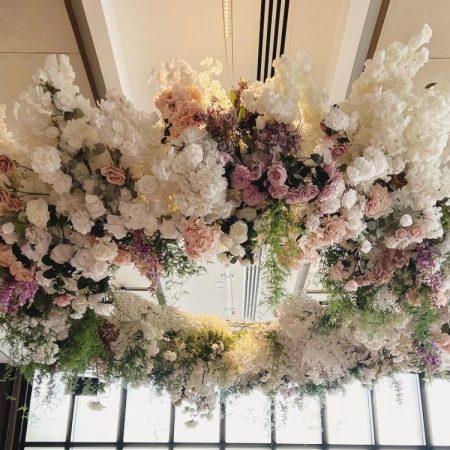
- hanging arrangements
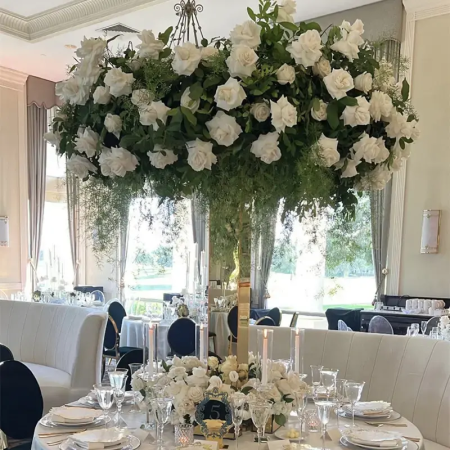
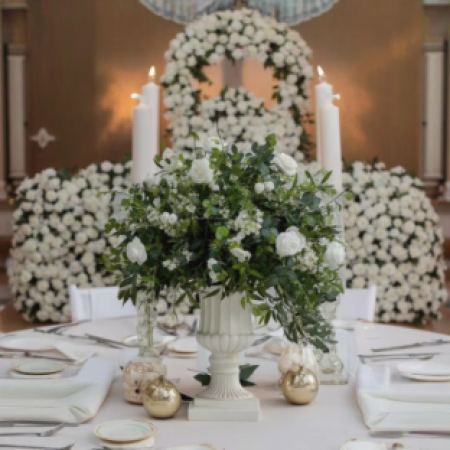
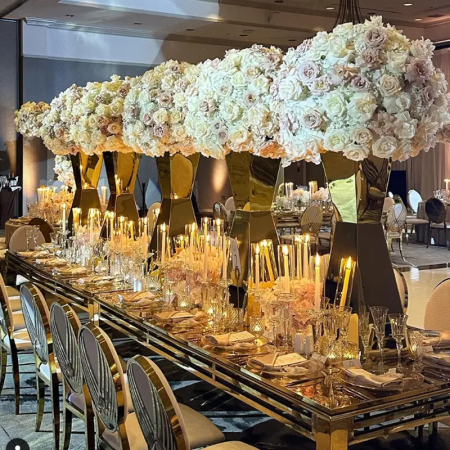
- large centerpieces
- greenery walls
- customized wedding installations
The result is a higher-value product category with greater potential for customization.
3. Wedding Buyers Are Moving Beyond Traditional Floral Styles
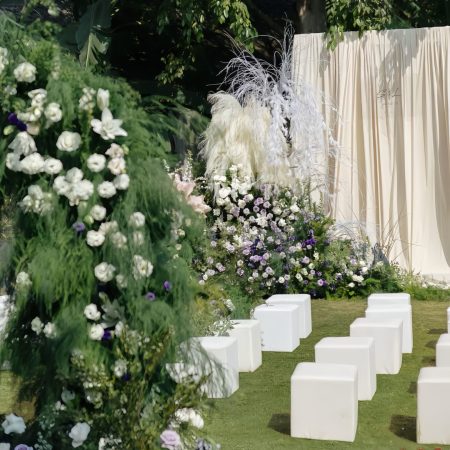
Current wedding design coverage points toward meadow-inspired centerpieces, long-stem bouquets, sculptural floral designs, monochromatic arrangements, suspended garlands, cascading white flowers, and more personalized installations.
These developments make wedding applications a major part of Artificial Flower Industry Trends 2026.
The traditional “standard wedding bouquet” is no longer the only opportunity.
Modern couples increasingly want their wedding flowers to reflect their personal style.
Popular design directions include:
Garden-Inspired Weddings
Loose arrangements, layered greenery, delicate flowers, and natural-looking compositions create an organic atmosphere.
Sculptural Floral Designs
Unusual shapes and dramatic flower placement can create a more editorial and luxury appearance.
Long-Stem Bouquets
Exposed stems and elongated arrangements create a modern visual style that works particularly well for fashion-forward weddings.
Monochromatic Floral Designs
Using different flowers in similar shades creates a sophisticated and coordinated appearance.
Large Ceremony Installations
Oversized arches and floral backgrounds can transform a wedding venue while creating highly photogenic spaces.
For US wedding suppliers, this means product development should focus not only on individual flowers but also on complete design concepts.
4. Color Is Becoming More Personal and Less Formulaic
The Artificial Flower Industry Trends 2026 story is not about one single “color of the year.”
Instead, the market is becoming more personalized.
US buyers are increasingly interested in coordinated palettes that create a specific mood or brand identity.
Potential directions include:
- soft blush
- dusty blue
- warm ivory
- champagne
- muted peach
- terracotta
- burgundy
- sage green
- earthy neutrals
- mixed natural tones
For wedding businesses, color customization can be particularly valuable.
A bride may want flowers that precisely match:
- bridesmaid dresses
- wedding invitations
- table linens
- venue decoration
- seasonal themes
This creates a strong reason for buyers to work with manufacturers that can provide custom colors rather than only standard catalog products.
For businesses building a differentiated product line, Yongnuo Flower can be positioned as a manufacturing partner for customized floral collections, wedding designs, color development, and wholesale projects.
5. Realistic Texture Is Becoming a Purchasing Factor
The next stage of Artificial Flower Industry Trends 2026 is strongly connected to tactile realism.
Previously, buyers often evaluated artificial flowers primarily through product photographs.
Today, professional buyers are more likely to evaluate:
- how soft the petals feel
- how naturally the stems bend
- how the leaves are finished
- how realistic the flower center looks
- whether colors have natural variation
- whether the finished arrangement looks convincing under different lighting
This is particularly important for premium wedding and home décor products.
A flower may look attractive in a product photograph but appear artificial when viewed closely.
For this reason, samples are becoming increasingly important in B2B purchasing.
Before placing a large order, professional buyers should evaluate physical samples whenever possible.
6. Artificial Flowers Are Expanding Beyond Weddings
A major Artificial Flower Industry Trends 2026 development is the wider use of faux florals outside traditional wedding applications.
Artificial flowers are increasingly relevant to:
Home Décor
Consumers can use artificial flowers in:
- living rooms
- bedrooms
- entryways
- dining rooms
- balconies
- home offices
Hospitality
Hotels, restaurants, cafés, and event venues can use artificial flowers to create decorative focal points without daily flower replacement.
Retail
Retailers can use floral displays for:
- storefronts
- window displays
- seasonal campaigns
- product photography
- showroom decoration
Commercial Interiors
Office buildings, showrooms, model homes, and commercial spaces can use artificial greenery and flowers to introduce natural visual elements with lower maintenance requirements.
This diversification gives wholesalers more opportunities to build multiple customer segments instead of relying exclusively on the wedding market.
7. Sustainability Is Becoming a Business Conversation
Reusable decoration is another important element of Artificial Flower Industry Trends 2026.
Artificial flowers are not automatically “sustainable,” and manufacturers should avoid making unsupported environmental claims.
However, reusability can provide practical value.
A professional wedding decorator may purchase a floral collection and reuse it for multiple events.
An event rental company can use the same arrangements repeatedly.
A retailer can store seasonal products and bring them back the following year.
Compared with single-use decorative products, reusable artificial floral products can therefore offer a different business model.
For B2B buyers, durability and reusability can become selling points when they are supported by good product quality.
8. Customization Is Becoming More Important for Wholesale Buyers
Another major Artificial Flower Industry Trends 2026 priority is customization.
Wholesale buyers increasingly want products that help them differentiate from competitors.
Instead of selling exactly the same catalog products as every other retailer, businesses can develop their own collections.
Customization may include:
- flower colors
- bouquet combinations
- arrangement sizes
- packaging
- private labels
- wedding collections
- seasonal collections
- exclusive product combinations
For example, a wedding supplier could develop an exclusive collection around a specific color palette.
A home décor retailer could create a private-label artificial flower line.
An event company could develop its own signature floral backdrop.
This moves the conversation from “What is your cheapest price?” toward “Can you manufacture the product we need?”
That is a much stronger position for both buyer and manufacturer.
9. What US Buyers Should Look for in an Artificial Flower Supplier
The Artificial Flower Industry Trends 2026 shift toward premium products makes supplier selection more important.
Price should not be the only purchasing factor.
US buyers should evaluate at least eight areas:
1. Product Quality
Check materials, petals, leaves, stems, color accuracy, and overall finishing.
2. Sample Quality
A sample should accurately represent expected bulk production.
3. Production Capability
The supplier should have enough capacity to handle repeat wholesale orders.
4. Customization
Ask whether the manufacturer can develop colors, designs, arrangements, or packaging.
5. Quality Consistency
The second order should look substantially the same as the first.
6. Communication
Fast and accurate communication can prevent expensive production mistakes.
7. Packaging
Artificial flowers must be packed carefully to reduce crushing and deformation during transportation.
8. Export Experience
International wholesale orders require proper coordination of documentation, packaging, shipping, and delivery.
For larger US buyers, the ideal supplier is not simply a seller of products.
It should be a long-term manufacturing partner.
10. What These Trends Mean for US Wholesale Businesses
The Artificial Flower Industry Trends 2026 outlook suggests that the strongest opportunities are not necessarily found in the cheapest products.
Instead, growth opportunities are increasingly connected to products that combine:
- realistic appearance
- modern design
- customization
- durability
- repeat-use value
- professional presentation
- dependable supply
This creates several potential strategies for US businesses.
Strategy 1: Build a Premium Collection
Focus on realistic flowers and sophisticated arrangements instead of competing at the lowest price.
Strategy 2: Specialize in Weddings
Develop collections specifically for:
- bridal bouquets
- ceremony arches
- centerpieces
- bridesmaid flowers
- reception décor
Strategy 3: Develop Private Label Products
Work with a manufacturer to create products under your own brand.
Strategy 4: Sell Complete Floral Solutions
Instead of selling individual stems, offer complete arrangements or installation systems.
Strategy 5: Target Commercial Customers
Hotels, restaurants, retailers, and interior designers can provide recurring B2B opportunities.
11. How a Factory Can Help Buyers Respond Faster
The Artificial Flower Industry Trends 2026 market is changing quickly.
A design that is popular today may be replaced by a different aesthetic next season.
This makes manufacturing flexibility increasingly valuable.
A capable factory can help buyers:
- test new flower styles
- develop custom colors
- create samples
- modify existing products
- combine different flowers
- develop seasonal collections
- scale successful products
For US businesses, this can reduce the distance between market demand and product development.
Instead of waiting for a standard catalog to change, buyers can participate directly in product development.
This is particularly valuable for brands that want exclusive designs rather than generic products.
12. Conclusion: Where Is the US Artificial Flower Market Heading?
The Artificial Flower Industry Trends 2026 market is becoming more sophisticated.
The biggest opportunities are moving toward:
- premium realism
- tactile materials
- oversized statement designs
- personalized wedding flowers
- sophisticated color palettes
- commercial applications
- reusable decoration
- private-label products
- OEM and custom manufacturing
For US wholesalers and professional buyers, this means the artificial flower category should no longer be viewed simply as a low-cost substitute for fresh flowers.
It is becoming a broader design and decoration category with applications across weddings, events, retail, hospitality, interiors, and home décor.
The businesses that understand these changes early will be better positioned to select the right products, develop stronger collections, and respond faster to customer demand.
If you are sourcing artificial flowers for wholesale, wedding decoration, retail, or custom projects, the most important question is no longer simply “What is the price?”
The better question is:
“Can this supplier help me build the products my customers will want next?”
That is where a reliable manufacturing relationship can create a real competitive advantage.