
The global artificial floral market has changed significantly. Buyers now expect more than attractive designs and competitive pricing. They want consistent quality, dependable production, flexible customization, export experience, and products that can perform in both wholesale and e-commerce environments.
This makes the story of Yongnuo Artificial Floral Arrangements Exporter relevant to US wholesalers, wedding suppliers, retailers, event companies, and private-label brands. Yongnuo’s development shows how a supplier can move from product manufacturing toward a broader export and quality-management model.
This analysis examines the practical factors behind that development: production scale, quality control, material selection, application-driven design, customization, logistics, and e-commerce discipline. It also explains why Yongnuo Artificial Floral Arrangements Exporter matters to US buyers.
1. From Product Supplier to Export-Oriented Manufacturing Partner
The first lesson from Yongnuo Artificial Floral Arrangements Exporter is that international growth requires more than adding products to a catalog.
Public company information describes more than 20 years of foreign-trade experience, direct factory resources, more than 2,000 SKUs, and continuing new-product development. The company also describes ODM and OEM capabilities for colors, sizes, packaging, exclusive flower types, drawings, and samples.
These capabilities matter because a professional US buyer may need seasonal collections, wedding assortments, private-label packaging, and coordinated floral styles from one supplier.
Instead of operating only as a product seller, a manufacturing partner can become part of the buyer’s product-development and sourcing process.
2. Production Scale Creates Consistency
Publicly reported company information describes a 30,000-square-meter manufacturing facility with 20 automated and semi-automated production lines. The value of this scale is not simply higher output, but repeatable production, inspection, assembly, and packaging.
For wholesale buyers, consistency is critical.
A retailer may need the same color and construction across multiple purchase orders. A wedding company may need dozens of matching arrangements for one event. An Amazon-focused seller may need replenishment inventory that matches approved samples.
This is where Yongnuo Artificial Floral Arrangements Exporter gains an important operational advantage: production capacity can support repeat orders rather than treating every order as an entirely new manufacturing project.
3. Quality Control Is More Important Than Low Unit Cost
For Yongnuo Artificial Floral Arrangements Exporter, quality control is closely connected with international customer trust.
Artificial flowers can fail through loose petals, uneven coloring, weak stems, unstable frames, crushed arrangements, or differences between the approved sample and the production batch.
A practical quality process can include:
- incoming material inspection
- component checks
- assembly inspection
- structural testing
- appearance inspection
- final packaging inspection
This matters even more in e-commerce.
A consumer receiving a finished product cannot solve a factory defect locally. For an Amazon seller, preventable defects can create returns, negative reviews, replacement costs, and inventory problems.
For that reason, factory quality control is not simply a production function. It becomes part of the seller’s customer-experience strategy.
4. Why Yongnuo Flower Matters to the Brand Story
The fourth part of this analysis is where production capability becomes a customer-facing brand promise.
Yongnuo Flower represents more than a catalog of artificial flowers. The company website presents factory production, custom floral design, wedding applications, wholesale products, and international shipping as parts of one connected offering.
For US buyers, that combination can shorten the distance between an idea and a finished product. Buyers can discuss reference images, colors, dimensions, packaging, and production quantities.
This is especially valuable for wedding decorators, event suppliers, retailers, and private-label businesses that need differentiated products rather than generic catalog items.
5. Material Selection Supports Appearance and Performance
Another important factor in Yongnuo Artificial Floral Arrangements Exporter is material adaptation.
Different applications require different material characteristics. Delicate petals need realism; large installations need stability; shipped products need to tolerate compression and handling.
Publicly reported product information describes polyester-based fabrics for floral components and PE foam for structural or moisture-resistant applications.
The broader lesson is simple: material selection should follow the purpose of the product.
A premium wedding bouquet may prioritize tactile realism. A large flower wall may prioritize strength, weight control, modular construction, and recovery after transportation.
A manufacturer that understands these differences can create products that are not only attractive in photographs but also practical for real-world use.
6. Application-Driven Design Expands the Customer Base
Yongnuo Artificial Floral Arrangements Exporter has an advantage when products are designed around applications rather than isolated flower names.
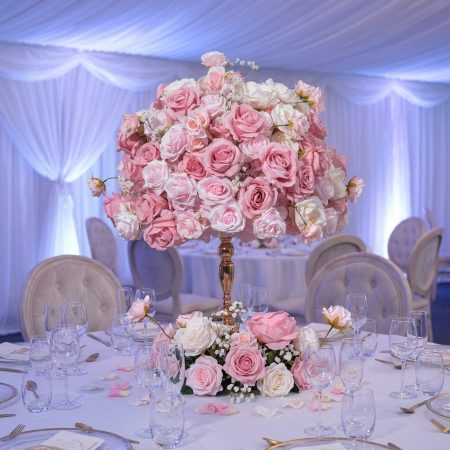
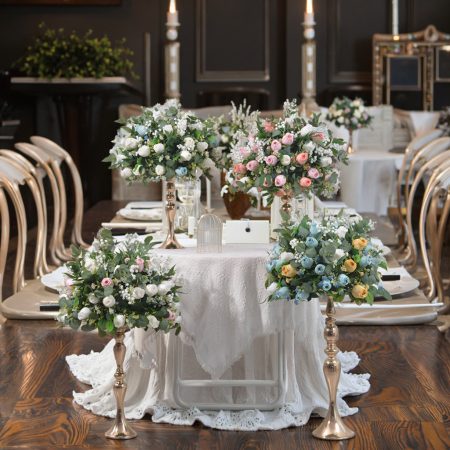
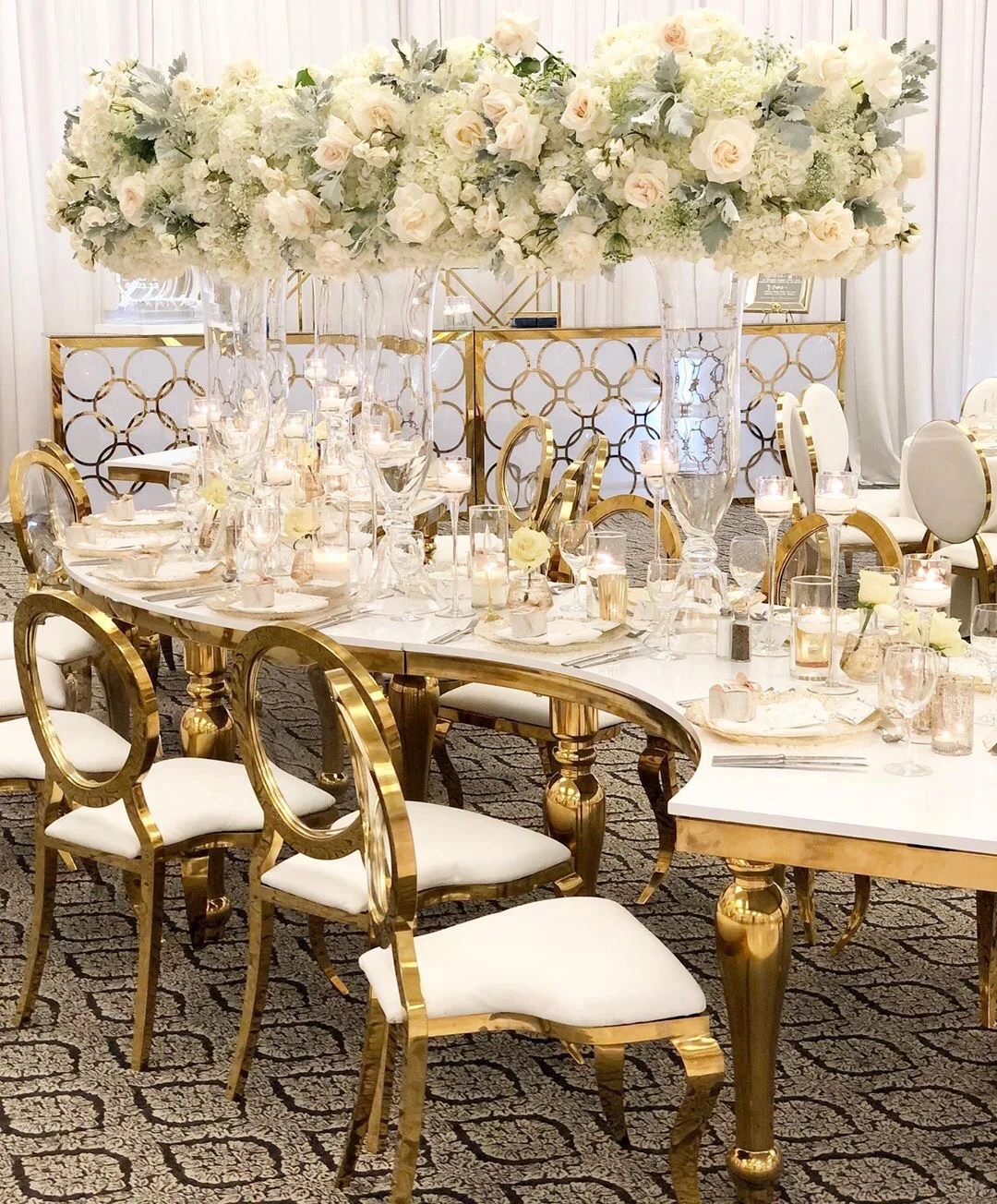
Wedding products can include:
- bridal bouquets
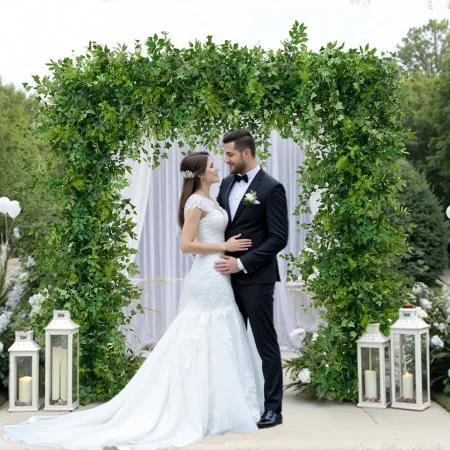
- ceremony arches
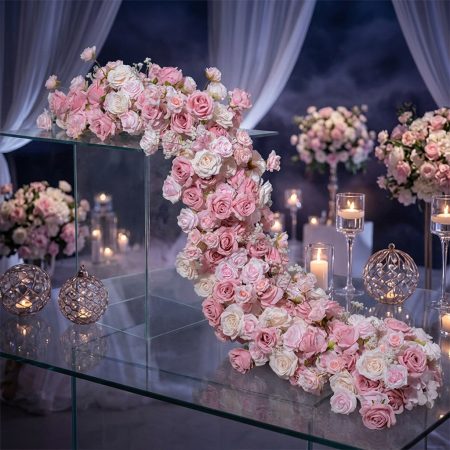
- flower walls
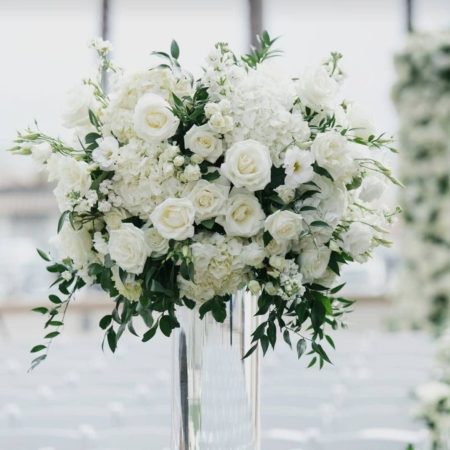
- table arrangements
- aisle decorations
- hanging installations
Commercial and home applications can include:
- retail displays
- hotel decoration
- restaurant interiors
- showroom styling
- residential décor
This application-driven approach makes it easier for buyers to identify a complete solution and creates opportunities for coordinated purchases.
The company’s current product presentation also emphasizes wedding arches, flower walls, ceiling arrangements, floral balls, table garlands, and other event-focused applications.
7. Customization Helps Buyers Differentiate
In a crowded US market, Yongnuo Artificial Floral Arrangements Exporter can create value through customization rather than competing only on price.
Customization can include:
- custom colors
- exclusive combinations
- arrangement sizes
- private-label packaging
- seasonal collections
- OEM product development
- sample-based manufacturing
This is particularly important for Amazon and retail sellers because customized designs can differentiate otherwise similar products.
For a US brand, customization can turn a generic artificial flower into a product designed around a specific customer segment, wedding aesthetic, seasonal collection, or brand identity.
8. E-Commerce Quality Changes the Meaning of “Good Product”
The Amazon side of Yongnuo Artificial Floral Arrangements Exporter is especially relevant because marketplace customers judge products differently from traditional wholesale buyers.
An Amazon customer sees:
- product photography
- dimensions
- packaging
- product descriptions
- reviews
- delivered condition
- actual appearance
A product must also remain consistent through shipping and match its listing presentation.
A flower arrangement that looks excellent on a factory table may not be good enough if it becomes deformed during transportation or differs significantly from its product photographs.
For e-commerce sellers, manufacturing quality therefore becomes part of listing performance, customer satisfaction, and repeat purchasing.
9. Logistics Turn Manufacturing Into a Global Service
Yongnuo Artificial Floral Arrangements Exporter uses a model combining bulk maritime shipping with expedited international delivery options, according to publicly reported company information. The same information describes customer support for order status, technical specifications, and customs documentation.
For US buyers, predictable logistics improve inventory planning and reduce the risk of event delays, stockouts, and rushed replenishment.
A wedding supplier needs products before an event date. A retailer needs replenishment before inventory disappears. An e-commerce seller needs sufficient stock to maintain sales continuity.
A supplier that can coordinate production and shipping therefore provides more value than a factory that only produces goods.
10. The Real Competitive Advantage: A Connected System
The strongest lesson from Yongnuo Artificial Floral Arrangements Exporter is that global growth does not come from one advantage.
It comes from connecting several capabilities:
Manufacturing + Quality Control + Design + Customization + Logistics + E-Commerce Awareness
If manufacturing is strong but quality control is weak, returns increase.
If quality is strong but customization is limited, products become interchangeable.
If logistics are unreliable, buyers face stock problems.
If products are excellent but the supplier does not understand e-commerce requirements, marketplace sellers may still struggle.
A connected system creates a stronger competitive position.
11. What US Buyers Can Learn From the Yongnuo Model
The Yongnuo Artificial Floral Arrangements Exporter story also provides a useful sourcing checklist for US buyers.
Before selecting a supplier, ask:
- Can the supplier provide consistent repeat production?
- Can it customize colors, sizes, arrangements, or packaging?
- Can it provide samples before bulk production?
- Does it have experience with international shipping?
- How does it inspect materials and finished products?
- Can it support both wholesale and e-commerce requirements?
- Can it scale successful products when demand increases?
These questions move supplier evaluation beyond unit price.
The best supplier is the one that reduces total operational risk.
12. Why the Model Matters for the Next Stage of Growth
The next stage of artificial floral exports will favor realistic products, faster development, flexible customization, reliable fulfillment, and stronger brand differentiation.
Yongnuo Artificial Floral Arrangements Exporter is a useful example because its model connects factory resources with international trade and market-facing product development.
For US wholesalers, the takeaway is straightforward: a supplier should not be evaluated only by what it can manufacture today. It should also be evaluated by how effectively it can help a buyer develop, test, replenish, and scale products tomorrow.
Frequently Asked Questions
What makes Yongnuo Artificial Floral Arrangements Exporter different from a basic flower supplier?
The model combines manufacturing resources, product development, customization, quality control, and international export support rather than focusing only on catalog sales.
Does Yongnuo support custom artificial flower products?
The company publicly describes ODM and OEM services, including customization of flower types, colors, sizes, packaging, drawings, and samples.
Why is quality control important for Amazon flower sellers?
Consistent quality helps reduce defects, returns, replacement costs, and customer dissatisfaction. It also helps products remain consistent between listing samples and replenishment orders.
Can US wholesalers work with a manufacturer for private-label floral products?
Yes. Buyers should confirm packaging, labeling, MOQ, sample, and production requirements before starting a private-label project.
What should a US buyer evaluate before placing a large artificial flower order?
Evaluate sample quality, production consistency, materials, customization, packaging, lead time, logistics capability, communication, and quality-control procedures.
Conclusion
The story of Yongnuo Artificial Floral Arrangements Exporter is ultimately a story about moving beyond simple manufacturing.
Global buyers increasingly need suppliers that can connect product design, factory production, quality control, customization, logistics, and e-commerce requirements into one reliable workflow.
For US wholesalers, wedding suppliers, retailers, event companies, and online sellers, that connected approach can make sourcing more predictable and product development more flexible.
The real question is no longer simply:
“Can this factory make artificial flowers?”
The more valuable question is:
“Can this manufacturing partner help us create, deliver, and scale artificial floral products that customers will trust?”
That is the standard that matters when building a long-term international supply relationship.